

Created by Maja from ABC tours

Croatia in 9 days, private guided tour


ITINARERY:
Day 1: Zagreb
Based on its strategic crossroad location, Zagreb boasts a long history of commerce and culture, all of which continue to thrive today. The city is divided into three parts – the Upper Town, Lower Town and the new section. The Upper Town, or Gornji Grad, is a thousand years old and home to the Presidential Palace and other historic landmarks — all set along cobbled streets lit by gas lamps. The 19th century Donji Grad (Lower Town) is filled with shops, restaurants and parks; and the modern, post-World War II Novi Zagreb (New Zagreb), filled with contemporary high-rise buildings.
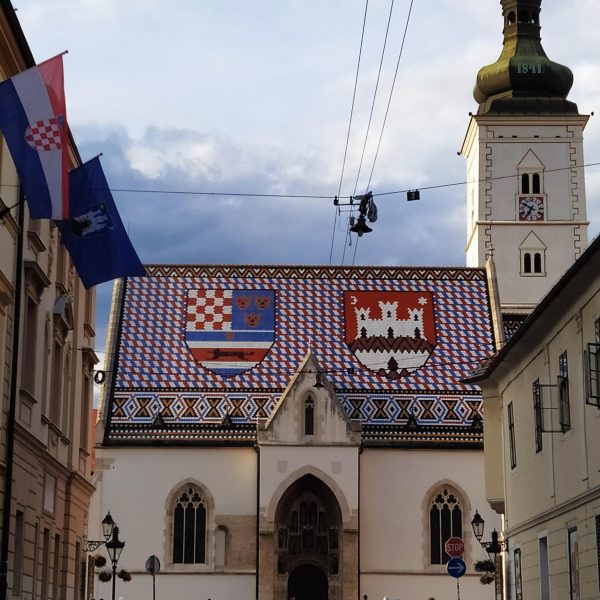
Begin your day with your guide to explore Gornji Grad, the historic heart of Zagreb, with a local expert. Discover the hidden wonders of Savska Street, the splendid old train station, Zrinjevac Park and the Croatian National Theatre. At St. Mark’s Cathedral, see the works of Ivan Mestrovic, Croatia’s most famous sculptor. Take advantage of the special photo opportunity with the colorfully uniformed guards at the Presidential Palace as you learn about the region’s history and admire this architectural treasure.
Proceed to the picturesque wine-growing region around the town of Sveti Ivan Zelina. Vineyards, vintners and wine cellars are included in the “wine-road,” which leads from Donja Zelina to Nespeš, Gornje Pisarje and Sveti Ivan Zelina.. During the thirty years of the traditional Exhibition of Wines of North-west Croatia, over 8,000 examples of wine have been evaluated, while the permanent exhibition of old vintners’ tools, equipment and literature, which bears witness to the long wine-growing tradition can be seen in the Museum of Sveti Ivan Zelina.
Day 2: Zagreb / Opatija
This morning explore the Plesevica wine-growing region along Croatia’s northwest border with Slovenia and situated some 30 km southwest from Zagreb.
Continue to Opatija located east coast of the Istrian Peninsula on the Adriatic Sea with its blend of beautiful landscapes, mild Mediterranean climate, and rich, picturesque history. Hotel Millennium stands next to beautiful St. Jacob’s Park, the city promenade, and the Lungomare coastal path.
Day 3: Istrian peninsula
Today explore the Istrian Peninsula, often called the “Croatian Tuscany”. In Porec visit the famous Basilica of St. Euphrasius, a 12th century UNESCO World Heritage Site that features artwork, mosaics and stained glass by Slovenia’s great artists and artisans. This collection of artwork reveals a visual chronicle of the city’s history.
Also visit the town of Rovinj, Istria’s cultural mecca. The town has a rich history, as well as interesting architectural buildings, beautiful natural resources and industrious people.
Day 4: Opatija / Primosten / Split
This morning, head south along the Dalmatian coast towards Split, stopping in the Primosten area, one of the most picturesque small towns on the Adriatic, with typical narrow streets in the old town on a small, hilly peninsula. Economy is based on farming, growing of vines and olives, fishing and tourism.
Continue to Split, the largest Croatian city on the Adriatic coast. The beautiful Le Meridien Lav is a chic resort with a wide range of facilities in a beachfront setting. It has established itself as the Adriatic’s premier beach resort. Stretched along a half-mile of seafront, just 5 miles south of Split, the hotel is both an architectural standout and a purveyor of some of the highest service standards in the country.
Day 5: Split
This morning visit Trogir, another UNESCO World Heritage Site, lying on the shores of the Adriatic Sea and known as the “Jewel of the Adriatic.” Stroll the streets of the town and visit the gloriously decorated 13th-century Cathedral with its unique portal, and the fortress of Kamerlengo, which was built by the Venetians as a naval base in the 13th century.
This afternoon discover colorful Split and its bustling waterfront with your guide. Stroll the maze of medieval streets that cluster around the mighty former palace of the Roman Emperor Diocletian, one of the most imposing Roman buildings still in existence. Diocletian’s mausoleum, located inside, now serves as the town’s cathedral.
Day 6: Split / Pelješac Peninsula / Dubrovnik
En route to Dubrovnik today visit the beautiful Pelješac Peninsula, located in the heart of South Dalmatia. This picturesque area is home to some of the most intriguing red wines in Europe. Continue to Ston a small town on Peljesac, located at the south of isthmus of the Pelješac peninsula. It was a military fort of the Ragusan Republic whose defensive walls are a notable feat of medieval architecture: there is 890 meters long town wall and 5 km Great Wall outside the town. The walls extend to Mali Ston (the little Ston), a smaller town on the northern side of the Pelješac and the end of the Gulf of Mali Ston (Malostonski zaljev), well known for its salt and oyster production.
Later arrive in Dubrovnik, an enchanting medieval walled city. Located on a spectacular cliff top, above Miramare Bay, the stunning Hotel Belleview is within walking distance of the Old Town, and each of the 9l rooms and suites has splendid sea views. There is a secluded pebble beach and an indoor pool.
Day 7: Dubrovnik
This morning take walking tour of Dubrovnik with your guide. Completed in the 13th century, the old city has remained basically unchanged since. Its medieval ramparts encircle the city which pedestrians can enter through one of two gates – either way, they cross a stone bridge under the gaze of the city’s patron Saint, Blaise or Vlaho, to find themselves joining the evening promenade down the broad, stone-paved Stradun. More than an avenue, it is the city’s main artery, lined with graceful stone palazzos where people work and live.
Visit the Dominican church and monastery with its rich treasury, the impressive Rector’s Palace, the Cathedral, and the 14th century Franciscan Monastery whose cloister ranks among the most inspiring sites of the city. “Those who seek paradise on earth,” George Bernard Shaw once wrote, “should come to Dubrovnik.”
Heavily damaged during the 1991-92 shelling, Dubrovnik is completely restored thanks to the dedication of its people and the Rebuild Dubrovnik Fund. Dubrovnik has been reclaimed not just as a Croatian treasure but one of the world’s treasures, a fact that was officially recognized when the United Nations declared it a World Cultural Heritage site.
DATES AND PRICES:
04.04. – 12. 04. 2020. 250 €
09.05. – 17. 05. 2020. 280 €
20.06. – 28. 06. 2020. 320 €
04.07. – 12. 07. 2020. 320 €
18.07. – 26. 07. 2020. 320 €
22.08. – 30. 08. 2020. 280 €
05.09. – 13. 09. 2020. 280 €
26.09. – 04. 10. 20202. 250 €
Reviews
There are no reviews yet.